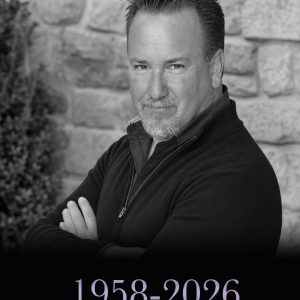
The diagnosis didn’t arrive with a bang; it arrived with a silence so profound it felt like the air had been sucked out of the room. My son, Leo, was thirty-three—an age when life is supposed to be a series of expansions, not a sudden, violent contraction. At first, we dismissed the symptoms. A bit of fatigue here, a strange tremor there, a persistent ache that we attributed to the grind of his career. We told ourselves it was stress, or perhaps a lingering virus. But eventually, the “hopeful maybes” offered by the first few doctors were replaced by the “quiet certainties” of specialists who no longer looked us in the eye.
In a sterile consultation room that smelled of industrial lemon and suppressed grief, the truth was finally spoken. It was a degenerative sentence, a slow fading of the light. From that moment, the world shifted its axis. The future, which had once felt like a vast, open territory, narrowed down to the dimensions of a hospital bed and the rhythmic, mechanical sigh of a ventilator.
Leo’s wife, Sarah, stood at the foot of that bed on the day the finality of the situation set in. She didn’t reach out to touch his hand. She didn’t ask about clinical trials or palliative care. She stood with her arms tightly crossed, a physical barrier between herself and the tragedy unfolding in front of her. Her eyes were dry, her expression carved from something colder than stone.
“I’m not going to waste my life watching him turn into a vegetable,” she said.
The words didn’t just hang in the air; they poisoned it. There was no goodbye, no lingering look of regret, and certainly no tears. She simply turned and walked away, her heels clicking a rhythmic, indifferent cadence down the linoleum hallway. She didn’t look back, and for the remainder of Leo’s life, she never returned.
In the wake of her departure, I did the only thing a mother could do. I sold my home. It was the house where I had raised him, where the doorframes were still marked with pencil lines tracking his growth, and where the kitchen smelled of the cinnamon rolls we made every Sunday. I didn’t hesitate. Money, which I had spent a lifetime saving for a quiet retirement, was suddenly nothing more than fuel. It was a resource to be burned if it meant one more week of comfort, one more specialist’s opinion, or a piece of medical equipment that might ease his breathing.
I moved into his spare room and became his world. I learned the intimate, heartbreaking language of caregiving. I learned how to puree food until it was a texture his failing muscles could manage. I learned the physics of lifting a grown man without bruising his fragile skin. I learned how to bathe him with a tenderness that preserved his dignity even as his body betrayed him. Most nights, I didn’t sleep in a bed; I drifted in and out of consciousness in a cramped recliner beside him, listening to the cadence of his breath, terrified of the silence that might follow.
When the pain grew too sharp for him to sleep, I filled the room with the sound of my voice. I told him stories he already knew by heart—about the time he tried to “fly” off the garage roof with a bedsheet cape, and how he used to insist the hallway light stay on to keep the shadows at bay. I reminded him, over and over, that he was the greatest achievement of my life. I made sure he knew that while one person had left, the one who mattered most was still standing guard.
The end, when it finally arrived, was a soft flickering out of a candle. Leo managed to find a final reservoir of strength. He squeezed my fingers, a faint but deliberate pressure, and his lips curved into a ghost of the smile that used to light up my entire world. He mouthed two words: “Thank you.”
There was no anger in his eyes. There was no resentment for the woman who had abandoned him or the life that had been stolen. There was only a profound, quiet gratitude.
The funeral was a blur of black fabric and whispered condolences. Sarah reappeared then, looking impeccably composed in a designer veil. She didn’t offer me a hug or a word of sympathy. Instead, she spoke the language of cold efficiency—of assets, deeds, and divisions. Because they were still legally married, the law was a shield for her. The marital home, the joint accounts, the cars—it all flowed toward her by default.
Three days after we laid my son to rest, she stood in the living room of the house I had been living in while caring for him. “You’ll need to be out by the end of the week,” she said, checking her watch as if I were a lingering tenant she was finally evicting.
I didn’t fight her. I didn’t have the energy for a war. I packed my life into boxes, moving through the rooms like a ghost. I folded Leo’s shirts with a slow, agonizing precision, pressing the fabric to my face to catch the last lingering scent of his skin—a mix of cedarwood and the soap he’d used for years.
It was while I was kneeling to retrieve an old, tattered wool blanket from the back of his closet—the one he’d loved since college—that I felt a resistance. Tucked deep into the corner, hidden behind a loose floorboard, was a sturdy shoebox.
I opened it, expecting old photographs or childhood mementos. Instead, I found a cache of documents that made my heart stutter. There was a deed to a house in a quiet, coastal town three states away—a home fully paid for, purchased years before he had even met Sarah. I had never known about it; Leo was always private with his successes, and I had never pried.
Inside the box was also a revised will and a letter addressed to me, dated only weeks after his diagnosis. His handwriting, though shaky, was unmistakable.
“Mom,” the letter began, “if you’re reading this, it means the fight is over. I knew what Sarah would do long before she actually did it. I knew she would take the house and the accounts, and I’m letting her. I don’t want her to be homeless, despite everything. But I needed to make sure you were okay.”
He explained that he had bought the coastal house as an investment, a place he once dreamed of filling with his own children. When he realized that dream was dying, he chose a new one. He had legally transferred the property into a trust for me, along with a separate life insurance policy he had kept hidden from the marital books. He had set aside enough for me to live comfortably for the rest of my days—enough to rest, to heal, and to recover from the exhaustion of the last year.
Even as his body was failing, even as he watched the woman he loved walk out the door, my son was thinking of me. He didn’t choose bitterness. He didn’t try to strip Sarah of what she felt she was owed. He simply chose to reward the one who stayed.
I moved into that house by the sea a month later. It is smaller than the home I sold, but it is filled with light. Every morning, I sit on the porch and look out at the horizon, feeling the steady, unshakable weight of his love. The grief is still there—it arrives in waves that threaten to pull me under—but beneath it is a foundation of pure pride.
I raised a man who, in the face of death and betrayal, chose grace. I raised a man who understood that loyalty isn’t just a word, but a series of actions taken when it’s hardest to stay. The world may see a tragedy when they look at his short life, but I see a masterpiece. He lived with empathy, he died with dignity, and he left me with the greatest gift of all: the knowledge that I was loved by the very best of men.