Category: News

  • On our wedding night, I had to give up my bed to my mother-in-law because

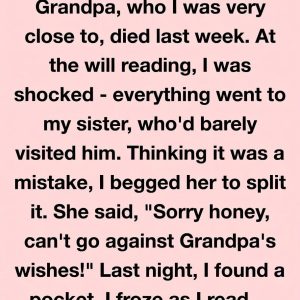
    On our wedding night, I had to give up my bed to my mother-in-law because

    smudged lipstick stain, bright red and unmistakable. It was right next to where my husband lay, and the sight of it made my stomach churn. I stood there, frozen, as the implications of what I was seeing slowly sank in.

    A wave of emotions crashed over me—anger, disbelief, confusion. This was supposed to be the beginning of our new life together, and yet here we were, embroiled in a situation that felt like a twisted plot from a bad soap opera. I tried to shake off the feeling of betrayal that gnawed at my insides, reminding myself that drunk people often did inconceivable things.

    My mother-in-law stirred, her eyes fluttering open. She caught sight of me standing there and gave a small, embarrassed smile. “Oh, dear, I must have been more tired than I thought,” she said, her voice slightly hoarse. She didn’t seem to notice the lipstick mark or, if she did, she was pretending it wasn’t there.

    I turned my attention to my husband, who was beginning to wake. He blinked up at me, his eyes struggling to focus. “Good morning,” he mumbled, clearly still groggy from sleep. I could feel the tension in the room, a thick, invisible wall between us and the truth of what had happened—or at least what I feared might have happened.

    I took a deep breath, trying to keep my voice steady. “There’s… something on the sheet,” I said, pointing at the offending stain. My husband followed my gaze, his brows furrowing as he registered the mark.

    For a moment, silence stretched between us. Then he sat up quickly, pulling the sheet closer as if that would somehow make the stain disappear. “I—I’m sure it’s nothing,” he stammered, but his voice lacked conviction.

    I wanted to believe him, to trust that this was just an unfortunate misunderstanding. Yet, the image of my mother-in-law’s lipstick on the sheet kept flashing in my mind, an unwelcome testament to the disruption of our wedding night.

    As the morning unfolded, the house slowly came to life with the sounds of family members stirring, laughter drifting from the kitchen where breakfast was being prepared. I tried to join in, to push the troubling thoughts to the back of my mind. But every time I saw my husband or passed my mother-in-law in the hallway, the doubts resurfaced, stronger each time.

    Throughout the day, I found myself questioning everything. Was this an isolated incident born out of too much champagne, or was it a sign of deeper issues that could plague our marriage? How could I talk to my husband about my feelings without triggering defensiveness or denial?

    In the weeks that followed, we navigated the usual challenges of newlywed life, but the shadow of that night lingered. It served as a constant reminder that marriage is never just about two people but a complex web of relationships and emotions that need to be managed with care and understanding.

    As time passed, I realized that communication was crucial. Eventually, my husband and I had an open, honest conversation about that fateful night and the boundaries we needed to set with his mother. It wasn’t easy, but it was necessary.

    Our wedding night had not gone as planned, but it taught me a valuable lesson: love requires patience, trust, and sometimes confronting uncomfortable truths to build a stronger foundation for the future.

  • Refrigerate or Leave Out? The Truth About Mayonnaise Storage

    Refrigerate or Leave Out? The Truth About Mayonnaise Storage

    How to Store Mayonnaise Safely: A Complete Guide
    Mayonnaise is a kitchen staple. Many households use it as a condiment or as an ingredient in recipes. But questions often arise: should it stay in the fridge or can it sit on the counter? This matters because improper storage can lead to foodborne illnesses. Knowing how to store mayonnaise properly ensures safety and preserves its quality.

    The Science Behind Mayonnaise
    Mayonnaise is an emulsion of oil, egg yolks, and an acid like vinegar or lemon juice. Egg yolks contain lecithin, which stabilizes the mixture. Commercial mayonnaise usually adds preservatives and pasteurized eggs, which extend its shelf life. Homemade mayonnaise lacks these safeguards, making it more prone to spoilage.

    Acidity in mayonnaise slows bacterial growth, but it’s not foolproof. Leaving it out at room temperature for too long can still be risky.

    Why Temperature Matters
    Temperature plays a critical role in mayonnaise safety. At room temperature, bacteria multiply quickly. Refrigeration slows this growth, keeping the mayonnaise safe longer. For best results, store mayonnaise below 40°F (4°C).

    Risks of Counter Storage
    Leaving mayonnaise on the counter can be dangerous. Harmful bacteria like Salmonella and Listeria thrive at room temperature. Extended exposure may also change the flavor and texture, making the mayonnaise unappetizing.

    How Long Can Mayonnaise Sit Out?
    Room temperature: Maximum of 2 hours.

    Hot weather: Reduce to 1 hour.

    After this, bacterial growth increases significantly. At that point, discard the mayonnaise to prevent illness.

    Signs Mayonnaise Has Spoiled
    Check for these warning signs:

    Off or sour smell

    Change in color

    Separation of the emulsion

    Visible mold

    Any of these indicators mean it’s unsafe to eat.

    Expert Recommendations
    Authorities like the USDA and FDA strongly advise refrigerating mayonnaise after opening. Experts highlight that following these guidelines reduces the risk of foodborne illness and preserves quality.

    For convenience or safety, consider:

    Shelf-stable mayonnaise packets – perfect for room-temperature storage until opened.

    Commercial mayonnaise with pasteurized eggs and preservatives – longer shelf life than homemade versions.

    Keep It Safe
    To enjoy mayonnaise safely:

    Refrigerate after opening.

    Discard if left out too long.

    Check for spoilage signs before use.

    Following these practices protects your health while keeping your mayonnaise fresh and delicious.

  • That Strange White Foam on Boiling Chicken? This Is the Real Reason

    That Strange White Foam on Boiling Chicken? This Is the Real Reason

    That Weird White Foam on Chicken? Here’s What’s Really Going On
    The first time I boiled chicken, I panicked when a white foam appeared on top. I worried the meat was spoiled or somehow chemically treated. I almost threw the entire pot away.

    It turns out, this is completely normal. If you’ve ever asked, “Why does chicken foam when I cook it?” you’re not alone. And the good news: it’s typically harmless.

    What Is That White Foam?
    At first, the foam looked strange—almost like dish soap or cloudy goo. After some research, I learned it’s nothing to fear.

    The foam forms from denatured proteins, mainly albumin, in the meat. When heated, these proteins unfold and rise to the surface, creating bubbles. Some fats and natural impurities also join the mix.

    Boiling makes the foam more noticeable because the constant motion pushes these components to the top. It’s a natural chemical reaction—not chemicals in your chicken.

    Is Chicken Foam Safe to Eat?
    Yes. The foam is entirely safe. It does not mean the chicken is spoiled or contains unusual ingredients.

    Signs of bad chicken include:

    Sour or ammonia-like smell

    Slimy or sticky texture

    Gray or green discoloration

    White foam alone is not a warning sign.

    Why Some Chicken Foams More
    Not all chicken behaves the same. Several factors increase foam production:

    Frozen chicken releases more water and proteins.

    Bone-in or skin-on chicken creates more foam.

    Leaner cuts like breasts produce more foam.

    Rapid boiling instead of gentle simmering increases foam.

    Even store-bought versus fresh chicken can differ. But remember: more foam doesn’t mean the chicken is bad.

    Does Foam Affect Taste or Quality?
    The foam has little flavor. It won’t make chicken taste sour or off. However, if you’re making broth or soup, leaving it in can make the liquid cloudy.

    For clear broths like ramen, pho, or consommé, skimming the foam improves appearance. For shredded chicken, tacos, or stew, leaving it in is fine.

    How to Remove Chicken Foam
    Here’s my method for a clear broth:

    Place chicken in a pot and bring to a gentle boil over medium heat.

    Use a spoon or fine-mesh strainer to remove foam as it forms.

    Reduce heat and simmer slowly once foam subsides.

    If you’re boiling chicken quickly for shredding, I skip this step. Foam is safe—it’s just about aesthetics.

    Common Myths About Chicken Foam
    Myth: Foam means chemicals.
    Fact: It’s just protein and fat.

    Myth: Foamy chicken is unsafe.
    Fact: Harmless unless other spoilage signs appear.

    Myth: You must discard foamy chicken.
    Fact: Absolutely not.

    How I Cook Chicken Now
    When making broth, I skim foam for clarity. When boiling chicken for tacos or pasta, I ignore it.

    In short: chicken foams because heat causes proteins to rise. That’s it. It’s natural, safe, and depends on the cooking method.

    So next time you see that white foam, relax. Your chicken is just doing what it’s supposed to do.

  • Billionaire’s Son Couldn’t Be Saved by 18 Doctors—Until a Poor Black Boy Spotted the Crucial Detail

    Billionaire’s Son Couldn’t Be Saved by 18 Doctors—Until a Poor Black Boy Spotted the Crucial Detail

    A Father’s Lesson on Compassion
    Vincent set down his newspaper and folded his hands. He gave his son his full attention.

    “Why do people have to be poor, Dad?” Elliot asked, his voice filled with genuine curiosity.

    Vincent paused, surprised by the depth of the question. He thought carefully before answering.

    “It’s complicated, Elliot,” he said. “Sometimes it’s about opportunities—or the lack of them. Sometimes it’s about choices. But often, it’s about circumstances people can’t control.”

    Elliot nodded, processing his father’s words. “So, can we help them?” he asked earnestly.

    Vincent smiled, pride swelling in his chest. “We do what we can. That’s why the foundation exists. But there’s always more to do. We just have to keep trying.”

    A Day That Changed Everything
    Their morning continued with laughter and stories. Neither of them knew it would be the last normal morning for a while.

    That afternoon, while playing at school, Elliot collapsed unexpectedly. An ambulance rushed him to the hospital. Doctors faced an unknown condition that left them baffled.

    Days turned into weeks. Fear and uncertainty filled the air. Top medical professionals tried every known procedure. Nothing worked. Vincent watched helplessly as his vibrant son lay motionless, connected to machines that kept him alive. A man who had built empires now felt powerless.

    Then Jalen appeared. A poor boy from the nearby neighborhood somehow found his way into the room. How he got past security or why he was drawn there remained unclear. Perhaps it was fate. Perhaps chance.

    Jalen noticed something the doctors had missed. Leaning closer to Elliot, he reached into the boy’s mouth and removed a tiny toy piece that had lodged in his throat. A small, overlooked object had blocked the airway.

    Saving a Life
    The doctors sprang into action. Soon, Elliot breathed freely again. The room erupted in cheers and tears. Vincent, overwhelmed with gratitude, turned to Jalen.

    “Thank you,” he said, his voice choked with emotion. “You’ve saved my son.”

    Jalen shrugged, a shy smile on his face. “I just saw something different,” he replied.

    Vincent noticed the boy’s worn clothes and knew he had to act. “Anything you need, it’s yours,” he promised.

    Jalen’s wish was simple. “Help my community,” he said. “Help those who don’t have what I have.”

    Turning Gratitude Into Action
    Vincent listened. In the following weeks, he poured resources into Jalen’s neighborhood. He opened a new community center, funded educational programs, and improved local medical facilities.

    The incident became a testament to the power of perspective and the profound impact of compassion.

    A Joyful Reminder
    Elliot recovered fully. On a bright Sunday morning, he and Jalen played together at the new community center. Their laughter echoed through the halls.

    It reminded everyone that sometimes the greatest insights come from unexpected places—and even the smallest voices can make the biggest difference.

  • Almost Losing Her Made Him See Love Differently!

    Almost Losing Her Made Him See Love Differently!

    I never thought a single night could hold that much terror, that much clarity. It began with pain—sharp, rolling contractions—and ended with a truth that changed the way my husband and I understood love forever. Between those two points was fear so thick I could taste it, and a silence that almost cost us everything.

    Earlier that day, my husband and I had argued. Nothing dramatic, nothing explosive—just the kind of disagreement that leaves tension hanging in the air, unresolved and heavy. We went about our evening separately, both convinced we had time to cool off, time to talk later. We always thought there would be a “later.”

    Then the contractions started.

    At first, I tried to stay calm. I timed them, breathed through them, told myself it was probably still early. But as the pain sharpened and the rhythm tightened, instinct kicked in. I reached for my phone and called him.

    No answer.

    I called again. Still nothing.

    Each unanswered call made the room feel smaller, the fear louder. I texted. I called. I watched the screen light up and go dark over and over, my hands shaking, my heart racing ahead of my body. By the tenth call, I was crying. By the twentieth, panic had settled into my bones. By the thirtieth, I knew I couldn’t do this alone.

    My brother arrived within minutes of my call to him. He didn’t ask questions. He didn’t hesitate. He just helped me into the car and drove. His presence was steady, grounding, a quiet anchor in a moment that felt like it was spinning out of control. Every contraction tore through me, but the physical pain wasn’t what hurt the most. What hurt was the absence. The empty passenger seat where my husband should have been. The realization that at the moment I needed him most, I couldn’t reach him.

    At the hospital, the lights were too bright, the hallways too long. Nurses moved quickly, voices calm and efficient, while I focused on breathing and not falling apart completely. Between contractions, I stared at my phone, willing it to ring. It stayed silent.

    Hours passed like that—pain, fear, waiting. Somewhere in that blur, my husband finally called back.

    My brother answered.

    His voice broke when he spoke. He didn’t yell. He didn’t explain. He simply said four words that were meant to shock, meant to wake something up that had gone dangerously numb.

    “She didn’t make it.”

    Those words landed exactly as intended.

    My husband later told me he dropped the phone. That his legs gave out beneath him. That every missed call replayed in his head at once, each one a reminder of how careless he’d been with time, with attention, with love. He drove to the hospital in a daze, barely aware of the road, convinced that he had lost me—that his silence had become irreversible.

    When he arrived, he sat in the waiting room, hollow and shaking, waiting to be told what he already believed was true. Minutes stretched. Guilt pressed down on him until it was hard to breathe.

    Then the doctor appeared.

    The words that followed shattered the nightmare and replaced it with something just as overwhelming. I was alive. Exhausted, shaken, but alive. And in my arms was our daughter.

    My husband broke down completely.

    Relief and guilt collided in him all at once. He sobbed without restraint, holding both of us as if letting go might make us disappear. The words he tried to say—apologies, regret, love—tangled together, raw and unfiltered. My brother’s lie had been brutal, but it had served a purpose. It forced my husband to face how close he had come to losing everything that mattered.

    In the weeks that followed, something shifted.

    There were no grand speeches, no dramatic promises. Instead, there was presence. Real presence. He was there for the early-morning feedings, even when he was exhausted. He changed diapers without being asked. He learned the rhythms of our daughter’s cries. He held me longer, touched my hand more often, looked at us like he was memorizing every detail.

    Love stopped being theoretical.

    It became action.

    Our relationship didn’t magically become perfect. We still disagreed. We still got tired, still snapped at each other sometimes. But the way we fought changed. The way we listened changed. Silence no longer felt safe. We talked things through because we understood what silence could cost.

    Sometimes, late at night, I watch him rock our daughter to sleep. His voice always softens when he talks to her, and there’s a tremor there he doesn’t bother hiding. He whispers the same sentence every time, like a confession and a promise rolled into one.

    “I almost lost both of you.”

    That night stripped something away from us—pride, distraction, the illusion that time is guaranteed. What it left behind was something sturdier. A love that isn’t loud, but steady. A love that doesn’t assume tomorrow will fix what we avoid today.

    I learned something too. I learned that strength isn’t just surviving pain; it’s letting it change you. It’s allowing fear to teach you what matters instead of hardening you. I learned that love isn’t proven in calm moments, but in how deeply it shows up when everything is on the line.

    We came frighteningly close to a different ending. One where regret would have been permanent. One where apologies would have arrived too late. That knowledge stays with us—not as a threat, but as a reminder.

    Life doesn’t always warn you when a moment will matter forever. Sometimes it just arrives, unannounced, and demands that you pay attention. Almost losing someone can break you. But it can also burn away what’s false and leave behind something honest.

    Our love didn’t become flawless that night.

    It became real.

    And real love—the kind built on presence, humility, and the courage to be vulnerable—is the kind that lasts.

  • A newly adopted stray dog saved the life of a newborn baby in the middle of the night!

    A newly adopted stray dog saved the life of a newborn baby in the middle of the night!

    When the Robinson family decided to leave their small rented apartment and move to a quiet rural property, they believed the biggest changes ahead would be learning how to manage land, space, and a slower pace of life. They were expecting their second child, and with a six-year-old son already bursting with energy, the idea of fresh air, open fields, and a future farm felt like the right next step. What they did not know was that one decision—made almost as an afterthought—would one day stand between life and death.Pet Adoption Stories

    For years, the Robinsons had wanted a dog. Their apartment lease forbade pets, and finances were tight, so the idea stayed a wish rather than a plan. But once they closed on their new home, the conversation resurfaced almost immediately. They didn’t want a puppy from a breeder. They wanted to adopt. They wanted to give a dog a second chance.

    They visited several shelters, listening to volunteers recount stories of abandonment, neglect, and bad luck. Many of the dogs barked loudly from behind kennel doors. Others cowered in corners. Then they came to a quiet enclosure where a stocky, gray Pit Bull sat with his head lowered, eyes avoiding contact.

    His name was Benson.

    Benson’s history was not an easy one. He had been used for fighting, discarded when he was no longer profitable, and left on the streets. By the time animal control found him, he was physically scarred and emotionally shut down. Trust was something he no longer offered freely. At the shelter, he barely reacted to people. Volunteers worried he might never be adopted.

    A family had tried once. They brought him home, hoping love would fix everything. Two weeks later, they returned him, saying he was “too distant” and “not friendly enough.” The rejection only deepened his withdrawal.

    When Mrs. Robinson heard this, she felt something settle in her chest. She didn’t see an aggressive dog. She saw one that had been broken by humans and then punished for not healing fast enough. Against common advice and without romantic illusions about an instant transformation, the Robinsons adopted Benson.Dog Adoption Services

    The first weeks were slow and careful. Benson didn’t bark. He didn’t wag his tail. He watched everything. Loud noises made him flinch. Sudden movements froze him in place. The family respected his space, especially their son, Mathias, who was taught to sit quietly near Benson and let the dog decide if he wanted contact.

    One afternoon, Benson approached Mathias on his own. He sniffed the boy’s hand, then sat beside him. That was all it took. From that day forward, Benson followed Mathias everywhere, not possessively, but attentively, as if learning what it meant to belong.

    When the baby arrived—a little girl—the family watched Benson closely. They worried his past trauma might surface. Instead, he surprised them again. He lay near the crib. He rested his head on the floor during feedings. He seemed to understand that this tiny human was fragile.

    Weeks passed. Life settled into sleepless nights and soft routines.

    Then came the night that changed everything.

    It was well past midnight when the silence broke. Not with a cry, but with barking—deep, urgent, relentless. Benson was barking from the baby’s room. Not once or twice, but continuously, louder than the family had ever heard him.

    Startled awake, the Robinsons ran down the hallway, fear already gripping them. When they reached the nursery, the sight stopped them cold. Benson had his mouth around the wooden slats of the crib, pulling and biting at them with desperate force.Baby First Aid

    For a split second, panic took over. Their first thought was that something had gone terribly wrong—that the dog had snapped.

    Then they saw the baby.

    She was motionless.

    Her chest wasn’t rising.

    Benson wasn’t trying to hurt her. He was trying to reach her.

    Mrs. Robinson grabbed her daughter and screamed for her husband. They rushed to the car and drove to the emergency room, Benson’s frantic barking still echoing in their ears.

    Doctors worked quickly. The diagnosis came soon after: the baby had stopped breathing. Had it gone unnoticed for much longer, she would not have survived.

    One doctor said it plainly. “If your dog hadn’t alerted you when he did, you wouldn’t be holding her right now.”

    The weight of that truth didn’t fully register until later, when the baby was stable and sleeping peacefully under hospital lights. The dog they had rescued—the one no one else wanted—the one deemed too broken, had saved their child’s life.Family Pet Adoption

    Benson had not been trained for this. No one taught him to recognize danger or sound an alarm. He acted on instinct, on attachment, on something deeply ingrained that humans had nearly destroyed but never fully erased.

    When the family brought the baby home days later, Benson never left her side. He slept near her crib, alert but calm. The house felt different now. Not just fuller—but safer.

    The Robinsons often say that when they adopted Benson, they believed they were saving him. What they didn’t realize was that he was quietly saving them too, long before that night ever came. He was learning trust. Learning family. Learning what it meant to protect rather than be used.

    Benson’s past didn’t disappear. He still startled at loud sounds. He still avoided strangers. But within his family, he was steady, loyal, and gentle. He had found his purpose—not as a fighter, not as a discarded animal—but as a guardian.

    The story spread, as stories like this do. Some people were surprised. Others weren’t. Those who work with animals understand that trauma doesn’t erase instinct, and love doesn’t always announce itself loudly. Sometimes it waits quietly, until it’s needed most.

    Benson never knew he was a hero. He only knew that the smallest member of his pack was in danger, and that abandoning her was not an option.Child Development Books

    And for the Robinson family, that night became a permanent reminder: second chances are not acts of charity. They are acts of faith. And sometimes, they come back to you in ways you could never have imagined.

  • SOTD – My Newborn Was Screaming in the ER When a Man in a Rolex Said I Was Wasting Resources

    SOTD – My Newborn Was Screaming in the ER When a Man in a Rolex Said I Was Wasting Resources

    When I carried my newborn into the emergency room in the middle of the night, I was already running on fumes. I hadn’t slept properly in weeks, my body still ached from surgery, and fear had wrapped itself so tightly around my chest it felt hard to breathe. What I didn’t expect was that a stranger in a tailored suit would make that night even harder—or that a doctor’s calm authority would turn the entire room upside down in seconds.

    My name is Martha, and exhaustion has become my default state.

    In college, I used to brag that I could survive on iced coffee and three hours of sleep. Back then, it was a joke. Now, it’s just reality, minus the humor. These days, my fuel comes from lukewarm formula, vending machine snacks, and sheer instinct. All of it for a tiny human who had entered my life only three weeks earlier and somehow already owned every part of my heart.

    My daughter’s name is Olivia. She was three weeks old that night, and she would not stop crying.

    We sat alone in the ER waiting room under harsh fluorescent lights. I slumped into a plastic chair, still wearing pajama pants stained with reminders of childbirth, not caring how I looked. One arm held Olivia against my chest, the other tried to steady her bottle as she screamed with a raw, hoarse cry that told me something wasn’t right.

    Her skin felt too warm. Not the normal warmth of a bundled baby, but the frightening kind. The fever had come on quickly, and every instinct in my body told me not to ignore it.

    I rocked her gently, whispering reassurances even though my own voice sounded brittle and worn. My throat burned from holding back tears. She didn’t calm down. If anything, she grew weaker, her cries thinner, and that terrified me more than the screaming ever could.

    My abdomen throbbed with every shift in the chair. The C-section incision was healing slowly, but pain had become background noise. There was no room for it. Between feedings, diapers, and constant worry, I barely registered my own body anymore.

    Three weeks earlier, I had become a mother alone.

    Olivia’s father disappeared the moment he saw the pregnancy test. He grabbed his jacket, said I’d “figure it out,” and walked out of my life without looking back. My parents had died in a car accident years before. There was no safety net, no backup plan. Just me, my baby, and the hope that I was doing enough to keep her safe.

    At twenty-nine, I was unemployed, healing from surgery, and praying to a God I wasn’t sure I still believed in that my baby would be okay.

    That was when a sharp, irritated voice cut through the room.

    “This is ridiculous,” the man said loudly. “How long do they expect us to sit here?”

    I looked up. Across from me sat a man in his early forties, hair perfectly styled, suit crisp, gold Rolex flashing every time he gestured. He looked like someone used to being listened to—and obeyed.

    He snapped his fingers toward the front desk, impatience radiating from him.

    “Can someone explain why this is taking so long? Some of us actually have important things to do.”

    The nurse behind the desk, her badge reading Tracy, responded calmly. “We’re treating patients based on urgency, sir. Please wait.”

    He laughed, sharp and dismissive, then pointed directly at me.

    “You’ve got to be kidding,” he said. “Her? Are we really prioritizing that over people who actually contribute? I pay taxes. I keep this system running. And now I’m stuck waiting while charity cases waste resources.”

    The room shifted uncomfortably. A few people looked away. No one spoke.

    I stared down at Olivia, kissed her damp forehead, and focused on breathing. I was too tired to argue. Too drained to defend myself. I’d met men like him before—men who mistook privilege for importance.

    He kept going.

    “This is exactly what’s wrong with everything,” he muttered. “People like me fund this place, and people like her abuse it. I should’ve gone private. Instead, I’m stuck listening to that thing scream.”

    Something inside me cracked, not with anger, but with a cold, steady resolve. I looked up and met his eyes.

    “I didn’t ask to be here,” I said quietly. “My daughter is sick. She has a fever, and I’m scared. But please, tell me more about how inconvenient this is for you.”

    He rolled his eyes. “Save the drama.”

    Before anyone else could speak, the double doors swung open.

    A doctor rushed into the waiting room, scanning faces quickly. The man in the Rolex straightened immediately.

    “Finally,” he said, smoothing his jacket. “Someone competent.”

    The doctor didn’t look at him.

    He walked straight past, stopping in front of me.

    “Baby with fever?” he asked, already reaching for gloves.

    I stood up, heart pounding. “Yes. She’s three weeks old.”

    “Come with me,” he said without hesitation.

    I barely had time to grab my bag. Olivia’s cries had softened into weak whimpers, which scared me even more.

    Behind us, the man exploded. “Excuse me! I’ve been waiting over an hour with chest pain!”

    The doctor stopped and turned, folding his arms. “And you are?”

    “Jacob Jackson,” the man said sharply. “Chest pain. Radiating. Could be a heart attack.”

    The doctor studied him briefly. “You’re breathing fine, not sweating, no distress. I’d guess muscle strain before cardiac anything.”

    The room went silent.

    Then the doctor gestured toward Olivia. “This infant has a fever at three weeks old. That’s an emergency. Infection at this age can become fatal fast. She goes first.”

    Jacob sputtered, but the doctor cut him off.

    “And one more thing,” he added calmly. “If you speak to my staff or patients like that again, you will leave. Your watch doesn’t impress me. Your money doesn’t change medical priority.”

    A slow clap started somewhere behind us. Then another. The waiting room filled with applause.

    I followed the doctor down the hall, legs shaking, heart racing.

    In the exam room, he examined Olivia carefully, explaining each step in a calm, reassuring voice. After tests and monitoring, he finally smiled.

    “It’s a mild viral infection,” he said. “You caught it early. She’ll be okay.”
    The relief nearly knocked me over.

    Later, the nurse brought in a small bundle—formula, diapers, a soft blanket, and a note that read, “You’ve got this.”

    When I left the hospital hours later, Olivia sleeping peacefully against my chest, the man with the Rolex sat silently in the waiting room, eyes down.

    I didn’t gloat. I didn’t speak.

    I simply walked past him, my daughter safe, feeling stronger than I had in weeks.

    That night taught me something I won’t forget: compassion saves lives long before money ever does.

  • He hit me every day over the tiniest things. burnt toast, a late reply, a wrong look,

    He hit me every day over the tiniest things. burnt toast, a late reply, a wrong look,

    He hurt me over things so small they barely felt real at first. Burnt toast. A text he thought I answered too slowly. A look he decided meant disrespect. There was always a reason, always an explanation, always a way to make it sound like I had caused what came next.

    “You made me do this,” he would say afterward, low and close, as if the softness of his voice could rewrite what my body already knew.

    My name is Emily Carter, and for three years I learned to live by a private calendar measured in bruises. Not dramatic moments. Not screaming fights the neighbors might hear. Just quiet, relentless harm that blended into daily life until pain felt ordinary and fear felt practical.

    Jason wasn’t violent all the time. That’s what made it harder to explain—to myself most of all. He could be attentive, charming, even apologetic. He knew exactly when to soften, when to promise change, when to remind me how much worse things could be if I were alone. Over time, I stopped asking whether what he did was wrong and started asking what I had done to deserve it.

    I got good at hiding. Long sleeves in summer. Makeup blended carefully along my jawline. Smiles rehearsed in the mirror before seeing friends. I learned how to apologize without thinking, how to anticipate his moods, how to make myself smaller so there would be less of me to provoke him.

    The violence stopped being explosive. It became controlled. Precise. Predictable. And somehow that was more frightening than rage. Rage burns out. Control doesn’t.

    The night everything broke open started like dozens before it. I dropped a glass while washing dishes. It shattered against the tile, the sound sharp and final. Jason went very still.

    That stillness was always the worst part.

    “Do you know how stupid you are?” he asked calmly.

    My chest tightened instantly. My heart began to race, fast and shallow. I felt the room tilt, my hands trembling as if they belonged to someone else. I told myself I just needed air, that I could get to the door, that I could breathe.

    I didn’t make it.

    Panic swallowed me whole. My legs gave out and the world narrowed to noise and darkness.

    When I came back, I was in the passenger seat of our car. Jason was driving far too fast, his hands locked tight around the steering wheel.

    “Listen to me,” he said, eyes forward. “You slipped in the shower. That’s what happened. You’re clumsy. You hear me?”

    I nodded because nodding was safer than anything else.

    At the hospital, the lights were harsh, almost painful. A nurse asked questions, but Jason answered them smoothly, confidently, like a man who had practiced this story before.

    “She fell,” he said. “Bathroom accident.”

    I stayed quiet. Silence had protected me before. Silence had kept things from getting worse.

    Then the doctor came in.

    Dr. Harris was calm, methodical, the kind of man who didn’t rush. He examined my ribs, my wrists, the fading bruise along my neck that makeup couldn’t quite hide. He paused more than once, his expression unreadable.

    “These injuries,” he said slowly, looking directly at Jason, “aren’t consistent with a simple fall.”

    The room seemed to stop breathing.

    Jason laughed, sharp and brittle. “What are you implying?”

    Dr. Harris didn’t argue. He didn’t raise his voice. “I’m saying this pattern suggests repeated trauma.”

    I turned my head slightly and caught Jason’s reflection in the metal cabinet across the room.

    His hands were shaking.

    For the first time, something shifted. Not for me—but for him.

    He recovered quickly, smoothing his jacket, slipping back into confidence. “My wife is fragile,” he said. “She has anxiety. She panics.”

    Dr. Harris nodded once, then looked at me instead. “Emily,” he said gently, “I need to ask you something. And I need you to answer honestly.”

    My heart thundered. Jason’s hand rested on my knee, light but deliberate.

    “Tell him,” he murmured. “You slipped.”

    For years, fear had made my choices. Fear of speaking. Fear of staying silent. Fear of what came after either option. But something in that room—maybe the IV in my arm, maybe the certainty in the doctor’s voice—gave me a clarity I hadn’t felt before.

    “I didn’t fall,” I said.

    Jason’s fingers tightened. “Emily—”

    “I didn’t fall,” I said again, louder. “He did this.”

    Everything unraveled at once. Dr. Harris stepped back. A nurse moved to my side. Security was called. Jason stood up so fast his chair scraped loudly across the floor.

    “She’s confused,” he shouted. “She has anxiety—”

    The nurse looked at my wrists, at the bruises shaped like fingerprints. Her face hardened.

    When the police arrived, Jason tried everything—joking, explaining, charming. None of it worked. When they asked if I wanted to file a report, my voice shook, but it didn’t vanish.

    “Yes,” I said.

    As they cuffed him, he leaned close and whispered, “You’re ruining everything. You’ll regret this.”

    For the first time, his words didn’t own me.

    The weeks afterward were brutal in a new way. Statements. Photographs. Interviews. Court dates. Nights waking in terror, convinced I heard his key in the lock. I moved into a small apartment with help from a local shelter. It wasn’t home. But it was safe.

    Jason was charged. His family blamed me. Some friends disappeared. Others surprised me by standing close when it mattered.

    Healing wasn’t dramatic. It didn’t arrive all at once. It was slow and uneven and awkward. But every morning I woke without fear of footsteps behind me felt like a quiet victory.

    The trial lasted six months. Six months of reliving things I had tried to bury. Jason never looked at me in court. When the verdict came back guilty, he didn’t look furious.

    He looked small.

    People often ask why I stayed so long. The truth is uncomfortable. Abuse doesn’t begin with fists. It begins with doubt. With blame. With someone convincing you that pain is normal and that you are the problem.

    I started therapy. I learned how fear rewires the brain. How silence becomes survival. How leaving isn’t one brave decision, but hundreds of tiny ones made under pressure.

    Today, my life is quieter. I work at a small marketing firm. I drink coffee without flinching at sudden noises. I laugh more. Trust still takes effort—but peace is real.

    Sometimes I think back to that hospital room. To the sentence that cracked everything open.

    “These injuries aren’t consistent with a fall.”

    It wasn’t just medical. It was permission. Permission to tell the truth.

    Speaking up didn’t destroy my life.

    Staying silent almost did.

  • What Do Smallpox Vaccine Scars Look Like and Why Do They Form?

    What Do Smallpox Vaccine Scars Look Like and Why Do They Form?

    I have a strangely clear memory from childhood of noticing a scar on my mother’s arm. It sat high on her upper arm, close to the shoulder, positioned in a way that felt intentional—as if it was meant to exist quietly, visible but not demanding attention.

    The scar didn’t look like an accident. It wasn’t a scrape or a burn or anything I recognized. It had a peculiar shape: a small circle made up of tiny indentations surrounding a slightly deeper mark in the center. Even as a child, I knew it carried meaning. It looked deliberate, almost ceremonial, like a symbol rather than an injury.

    I don’t remember exactly why it fascinated me so much. Children fixate on odd details without understanding why. Maybe it was the symmetry of the pattern, or the way it stood out against otherwise unmarked skin. Whatever the reason, I remember noticing it repeatedly, thinking about it, quietly wondering what kind of event could leave a mark like that.

    As with most childhood curiosities, the question eventually faded. The scar never disappeared, but my attention drifted elsewhere. School, friendships, growing up—life rewrote my focus. If I ever asked my mother about it back then, I don’t remember the answer. If she explained it, the explanation didn’t survive the mental clutter of time.

    Years passed. The scar became just another unnoticed detail in the background of familiarity.

    Then, one summer many years later, something jolted that memory back to life.

    I was helping an elderly woman off a train, offering my arm as she stepped carefully down onto the platform. As she adjusted her grip, her sleeve shifted slightly, exposing her upper arm.

    There it was.

    The same scar. Same location. Same circular pattern. Same unmistakable shape.

    For a split second, it felt unreal, like seeing a childhood dream suddenly appear in daylight. The image stopped me cold. This wasn’t coincidence. This wasn’t unique to my mother. This was something shared—something intentional, something rooted in history.

    I wanted to ask the woman about it right then, but the moment slipped away. The train doors closed, people moved, and the rhythm of the day reclaimed itself.

    Instead, I called my mother.

    When I described what I’d seen, she laughed softly. Yes, she said, she had explained that scar to me before. More than once, apparently. My younger brain had simply decided the information wasn’t worth holding onto.

    The scar, she told me, came from the smallpox vaccine.

    That answer opened a door to a story far larger than I expected.

    Smallpox was once one of the most feared diseases humanity had ever known. Caused by the variola virus, it spread easily and killed mercilessly. Infection usually began with fever, exhaustion, and intense pain, followed by a distinctive rash that spread across the body. That rash turned into fluid-filled blisters, then scabs, often leaving deep, permanent scars behind.

    At its peak, smallpox killed roughly three out of every ten people who contracted it. Survivors were often left disfigured for life, their faces and bodies marked by pitted scars. In severe cases, the disease caused blindness. Entire families and communities could be devastated in a matter of weeks.

    For centuries, smallpox shaped human history. It altered populations, influenced wars, and traveled across continents. No class, nation, or culture was immune to its reach. Fear of outbreaks lingered constantly, an invisible threat waiting to resurface.

    The turning point came with vaccination.

    The smallpox vaccine was unlike most vaccines we know today. It didn’t use a weakened or inactive form of the smallpox virus itself. Instead, it relied on a related virus called vaccinia, which trained the immune system to recognize and fight smallpox without causing the disease.

    Through massive, coordinated global vaccination campaigns, smallpox was steadily driven back. In the United States, it was eliminated by 1952. Routine vaccinations continued for several decades after that, but by 1972, they were no longer given to the general public.

    In 1980, the World Health Organization officially declared smallpox eradicated worldwide—the first and only human disease to be completely eliminated.

    For people born before the early 1970s, however, the vaccine was a normal part of childhood. And it almost always left a permanent mark.

    In a way, the scar functioned like an early form of a vaccine passport: silent proof that the body had been protected against one of the deadliest threats humanity had ever faced.

    So why did the vaccine leave such a distinctive scar?

    The answer lies in how it was administered.

    Unlike modern vaccines delivered through a single injection into muscle, the smallpox vaccine was applied directly to the skin using a special two-pronged needle. The needle was dipped into the vaccine solution and then pressed rapidly into the skin multiple times, puncturing the upper layers.

    This method delivered the vaccine into the dermis, triggering a localized reaction rather than a quiet absorption. Over the next several days, a raised bump formed at the site. That bump became a blister, then a scab. The process unfolded over weeks, not days.

    This wasn’t a side effect in the modern sense. It was the immune system learning, responding, building protection in real time. The visible reaction was expected. It meant the vaccine was doing exactly what it was supposed to do.

    When the scab eventually fell away, it left a scar. The size and shape varied slightly from person to person, but the pattern was remarkably consistent: a circular indentation, sometimes ringed by smaller marks from the needle punctures. Over time, the scar faded, but it never fully disappeared.

    Today, that scar is a relic.

    It’s a physical reminder of a battle humanity actually won.

    In an age when many once-deadly diseases are no longer part of daily life, it’s easy to forget how fragile survival used to be. Medical breakthroughs have made certain fears feel abstract, distant, almost theoretical.

    But the smallpox scar tells a different story. It speaks of fear that was once constant, of resilience built through collective effort, of trust placed in science and public health at a global scale.

    Seeing that scar now feels different than it did when I was young. What once seemed mysterious now feels heavy with meaning. It’s not just a mark on the skin. It’s evidence of survival, of cooperation, of progress achieved through persistence rather than luck.

    That moment on the train reminded me how easily we forget the struggles that shaped the present. Diseases that once defined lifetimes have become footnotes. But for those who lived through them—or through the effort to eradicate them—the memory remains, sometimes literally etched into their bodies.

    My mother’s scar is small and easy to miss unless you know what to look for. But now, when I see it, I don’t just see an old mark. I see history.

    I see proof of what coordinated public health can accomplish. I see a reminder that the safety we take for granted was earned through decades of research, sacrifice, and collective resolve.

    And every time I notice that familiar circular pattern on someone else’s arm, I’m reminded that history doesn’t just live in books or museums. Sometimes, it travels with us quietly, permanently, and meaningfully—carried in skin, memory, and shared human experience.

  • A school bully humiliated a poor student in front of the entire school

    A school bully humiliated a poor student in front of the entire school

    The atmosphere inside the high school gymnasium was thick with the suffocating energy of a public execution. It was the kind of noise that defines adolescence—a chaotic blend of sharp laughter, jagged whispers, and the rhythmic squeak of sneakers against polished hardwood. Students had gravitated toward the center of the room, forming a dense, suffocating ring of spectators. In the digital age, a confrontation was no longer just a private moment of cruelty; it was content. Dozens of smartphones were already raised, their lenses focused and ready to capture the impending downfall of the school’s most invisible inhabitant.

    At the center of this predatory circle stood Anna. She was a girl defined by her absence—small, slight of frame, and perpetually draped in an oversized grey hoodie that seemed designed to swallow her whole. For years, she had mastered the art of being a ghost in the hallways. She sat in the back rows of classrooms, avoided the cafeteria drama, and never raised her voice. She was the “poor student,” the girl who wore the same worn-out shoes every day and whose only notable trait was an intellect she tried desperately to downplay.

    Standing in stark, violent contrast to her was Marcus. He was the school’s golden boy, though the gold was merely a thin plating over a base of arrogance. As the captain of the varsity football team and the coaches’ undisputed favorite, he moved through the school with the entitlement of a conqueror. To Marcus, the world was divided into those who served his ego and those who were obstacles to it. Today, Anna had inadvertently become an obstacle.

    “So, the genius finally decided to grace us with her presence?” Marcus’s voice boomed, bouncing off the rafters and drawing a chorus of sycophantic snickers from his teammates. “Decided you were too smart for your own good today, didn’t you? Decided to make a fool out of me in front of the whole class?”

    Anna’s hands were buried deep in the front pocket of her hoodie, her fingers trembling against her palms. She kept her gaze fixed on the floor, her voice barely a thread of sound. “I just answered the teacher’s question, Marcus. That’s all.”

    “That’s all?” Marcus took a predatory step forward, his shadow looming over her like a shroud. The height difference was staggering; he was a wall of muscle and athletic prowess, while she looked like a sapling caught in a storm. “You knew exactly what you were doing. You made me look like an absolute idiot while the scouts were watching. You think your little ‘correct answers’ make you better than me?”

    “I didn’t mean to…” Anna whispered, her voice cracking.

    “You didn’t mean to?” Marcus leaned down, his face inches from hers, his breath hot with anger. “And now? Do you want to fix it? Do you want to show everyone how sorry you really are?”

    The gym went deathly silent. Even the most hardened observers felt a chill of unease. This was crossing a line from typical bullying into something darker, something more transformative.

    “Kneel,” Marcus commanded, his voice dropping to a calm, terrifying silkiness. “Kneel right here on the wood and apologize to the team. Maybe then I’ll let you go back to your little corner.”

    Anna lowered her head. A ripple of movement went through the crowd; some people turned away, unable to watch, while others leaned in, their thumbs hovering over the record buttons. To every eye in that room, Anna looked broken. She looked like a girl who was about to surrender the last shred of her dignity to a boy who didn’t deserve it.

    But beneath the oversized hoodie and the facade of the “poor, quiet girl,” a different reality lived. None of them knew that Anna had spent five years of her life inside the sweat-stained walls of a boxing gym. They didn’t know about the thousands of hours she had spent hitting heavy bags until her knuckles bled, or the discipline it took to become a regional junior champion. She hadn’t left the sport because she lacked heart; she had left because a devastating shoulder injury had threatened her long-term health, forcing her into a life of forced passivity. She had traded the ring for the library, trying to bury the warrior she once was beneath layers of academic focus and silence.

    Anna took a deep, steadying breath. The trembling in her hands stopped. It wasn’t the trembling of fear; it was the awakening of muscle memory.

    “Marcus,” she said, her voice no longer a whisper, but a steady, resonant tone that cut through the tension. “I am asking you to step back. Please. Don’t do this.”

    Marcus laughed, a harsh, jagged sound. “Oh, she’s giving me orders now? You hear that?” He turned to his friends, grinning, and then turned back to shove her hard with his shoulder, intending to knock her to the ground.

    In the span of a single heartbeat, the “invisible girl” vanished, and the champion returned.

    Anna’s reaction was a blur of practiced, lethal efficiency. As Marcus’s shoulder came toward her, she didn’t stumble. She pivoted on the ball of her lead foot, a graceful, athletic “slip” that left Marcus hitting nothing but air. Before he could even register that he had missed, Anna moved into the pocket. She delivered a lightning-fast, compact hook to the solar plexus. It wasn’t a wild swing; it was a professional’s punch—short, explosive, and perfectly timed.

    The air left Marcus’s lungs in a sickening wheeze. He doubled over, his face turning a panicked shade of purple as his diaphragm seized. He tried to scramble backward, his hands flailing, but he was caught in the wake of a ghost he had spent years mocking. As he struggled to straighten his posture, Anna delivered a second strike—a clinical, controlled jab to the point of his jaw. She held back just enough to ensure she didn’t cause permanent damage, but she hit with enough force to switch off his equilibrium.

    The “King of the School” collapsed. He didn’t fall gracefully; he crumpled onto the hardwood floor, a heap of expensive sportswear and shattered pride.

    The silence that followed was absolute. It was the kind of silence that happens when a fundamental law of physics is suddenly broken. The phones were still pointed at the center of the room, but no one was cheering. The laughter had died in their throats. They weren’t looking at a victim anymore; they were looking at a master of a craft they didn’t even know existed.

    Anna stood over him for a moment, her posture perfectly balanced, her breathing rhythmic and calm. The hoodie no longer looked like a hiding place; it looked like a shroud for a weapon.

    “I left the sport because of an injury,” Anna said, her voice echoing in the rafters, “but the skills didn’t disappear. I spent years learning how to control my strength. You should spend some time learning how to control your ego.”

    Without a glance at the crowd or the fallen boy on the floor, Anna turned and walked toward the gym doors. The sea of students parted for her instantly, a silent corridor of newfound respect and genuine fear. No one tried to stop her. No one threw a taunt. As she pushed through the double doors and stepped out into the quiet hallway, the gym remained frozen behind her.

    The lesson that day had nothing to do with the teacher’s question in class. It was a lesson in the dangers of underestimation. The world had seen Anna as a target because she was modest, quiet, and poor. They had mistaken her restraint for weakness and her silence for submission. But as Marcus struggled to find his breath on the gym floor, the rest of the school realized that the most dangerous person in the room is often the one who feels no need to prove it. Anna walked home that afternoon still wearing her worn-out shoes and her oversized hoodie, but the ghost was gone. In her place was a girl who finally understood that while she had left the ring, the heart of a fighter would always be her truest home.